Prefabrication is a modern process in which installation components—from electrical switchboards and pipelines to in-building system modules—are manufactured in controlled factory conditions and only then delivered to the construction site. This solution is increasingly replacing traditional on-site installation, allowing for shorter project implementation times and significantly improved quality.
Prefabrication enables precise matching of each component to the design, eliminating errors resulting from working in variable construction conditions, and providing full control over the production and testing process. Prefabricated low-voltage switchboards and finished piping modules are tested before delivery to the project, ensuring their reliable operation and the safety of electrical and technological systems.
Modern prefabrication of building systems not only saves time and costs but also increases project predictability—particularly in industrial and energy projects. More and more companies are choosing this work model because the prefabrication process reduces the risk of delays, streamlines logistics, and ensures the highest quality of workmanship, which is difficult to achieve with traditional on-site assembly.
Prefabrication – how does this process work and what does it involve?
The installation prefabrication process is a carefully planned sequence of steps that begins at the design level. Based on technical documentation, accurate 3D models of the installation are created, allowing for the precise design of all prefabricated structure elements – from ducts and conduits to complete electrical switchboards. This allows for the identification of potential conflicts, optimization of component layout, and reduction of on-site assembly time.
The next stage involves the production of prefabricated components in the factory – in controlled, repeatable factory conditions, using modern tools and automation. In this environment, prefabricated low-voltage switchboards, hydraulic and piping modules, as well as sections of electrical and sanitary systems, are manufactured. Each component is thoroughly tested for leaks, safety, and quality of workmanship before being delivered to the project site.
The prefabrication process concludes with the transport and assembly of the finished modules on site. This allows work to proceed faster on site and without the risk of downtime due to weather conditions or component shortages. Prefabrication enables installation of systems using a “plug and play” formula – simply connect prefabricated sections, significantly shortening construction time and increasing worker safety.
In practice, the prefabrication process allows for maintaining the highest standards of workmanship, reducing waste, and optimizing project logistics. This solution is successfully used in modern industrial plants, logistics centers, and public buildings, where both precision and reliability are essential.
Advantages of prefabrication compared to on-site assembly
Prefabrication of systems is a solution increasingly chosen by investors and contractors – not only due to its cutting-edge technology, but primarily due to the specific economic, technical, and organizational benefits. Compared to traditional on-site installation, prefabrication ensures higher quality, shorter lead times, and greater predictability throughout the construction process.
Shorter Project Implementation Time
The greatest advantage of prefabrication is the significant reduction in construction time for prefabricated structures. Production of system components occurs simultaneously with site preparation, allowing assembly to begin immediately after delivery. Finished electrical modules and switchboards arrive on site as complete, tested components, enabling faster installation and reducing downtime.
Higher Quality and Consistency
In a factory environment, every production step is subject to quality control. Prefabrication of electrical and process systems allows for significantly greater precision than assembly carried out in variable weather conditions. Testing finished switchboards and modules before shipment eliminates the risk of assembly errors, and the prefabrication process ensures consistent quality in line with industry standards.
Safety and Regulatory Compliance
Prefabrication of industrial switchboards and components for plumbing and process systems is carried out in accordance with certification requirements. This ensures that the investor receives ready-to-use electrical switchboards that meet all electrical safety standards. On-site assembly is reduced to connecting prefabricated sections, minimizing the risk of errors and failures.
Cost and Logistics Optimization
Prefabrication allows for better planning of the production and assembly process. Reducing on-site work translates to lower labor costs, reduced equipment requirements, and reduced material waste. Additionally, prefabricated components are transported in an optimized manner, simplifying the logistics of large industrial investments and shortening construction time.
Flexibility and Customization
Prefabrication of installations allows for the full customization of components to the customer’s requirements – from the layout of switchboards to the technical specifications of pipes, ducts, and conduits. The prefabrication process enables customization without compromising production repeatability, which is particularly important when modernizing installations or constructing technologically complex facilities.
Sustainability and Energy Efficiency
The production of prefabricated components in plants allows for better material management and reduced waste. As a result, prefabrication supports the concept of sustainable construction, and modern technologies used in the prefabrication process contribute to increased energy efficiency.
On-site Assembly – When Does It Still Make Sense?
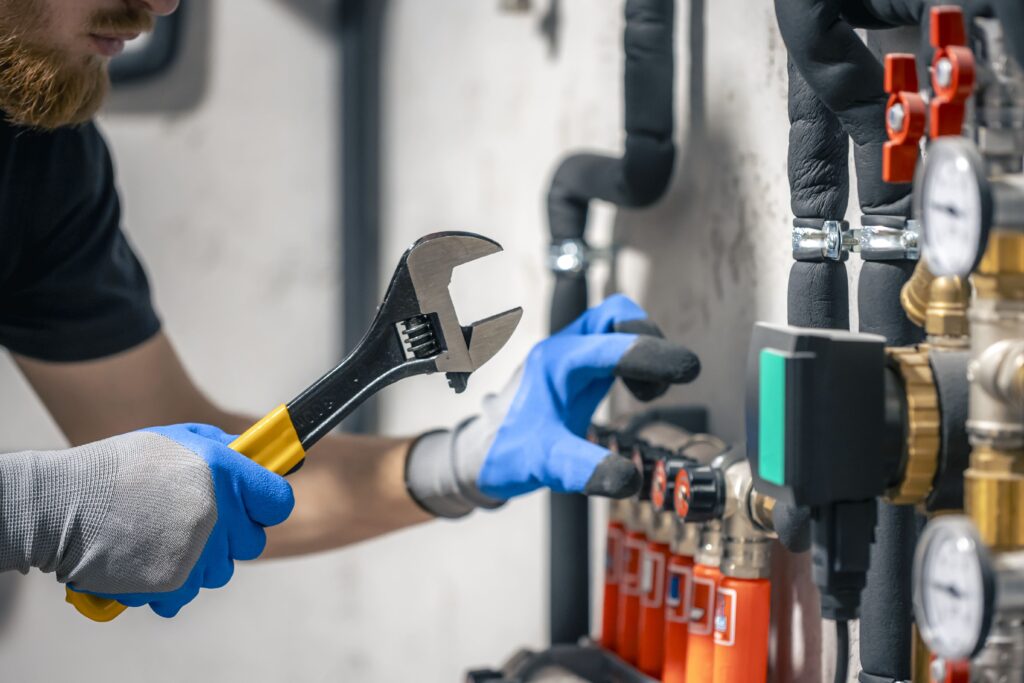
Although prefabrication of systems is gaining popularity, in some cases, on-site assembly still remains the more practical solution. This is due to the nature of the facility, its complexity, or technical limitations that prevent advance preparation of components at a prefabrication plant.
Modernization of Existing Systems
When modernizing or expanding electrical and technological systems in existing industrial plants, it is often difficult to predict all technical and spatial conditions. In such situations, the work requires a customized approach and ongoing adjustments, so on-site assembly allows for greater flexibility.
Small or Custom Investments
For small-scale projects – such as commercial premises, single-family homes, or modernizations of sections of process lines – the prefabrication process may prove less cost-effective. Shorter lead times do not always offset the costs of producing prefabricated components, so in such cases, traditional assembly can be more economical.
Difficult to Predict Construction Conditions
Not all investments can be planned with sufficient precision to utilize prefabricated modules. In situations where technical documentation changes during construction or space constraints arise, on-site assembly allows for the project to be quickly adapted to current conditions.
Integration with Non-Standard Systems and Equipment
Some industrial facilities require the integration of installations with non-standard machines or technologies. In such cases, the prefabrication of industrial switchboards and installation modules may require numerous adjustments after delivery to the construction site. Performing some assembly work on-site allows for more precise matching of components to the specific equipment and the investor’s requirements.
Prefabrication in Practice – Electrical Switchboards and Piping
Prefabrication is widely used today in the construction of industrial, electrical, and technological installations, and its potential is particularly evident in areas such as electrical switchboards and process piping. This is where the prefabrication process allows for the highest repeatability, safety, and quality control, which are difficult to achieve with on-site assembly.
Prefabrication of Electrical Switchboards – Precision and System Safety
Complete prefabricated low-voltage switchboards are now being manufactured in factory environments, fully customized to the needs of a given facility. Each module is designed with a specific installation in mind – from the current path layout, through the selection of protection devices, to the integration of monitoring and automation systems.
Prefabrication of industrial switchboards enables thorough testing of finished sections before shipment, eliminating the risk of assembly errors and ensuring the safety of electrical systems from the very first start-up. In practice, this means:
shorter on-site assembly time,
greater reliability,
full compliance with safety and quality standards.
Prefabricated electrical switchboards prepared in the prefabrication plant are delivered to the project as complete, tested units that only require connection to the infrastructure. This workflow shortens the implementation time and allows for other construction work to be carried out in parallel.
Piping Prefabrication – Speed and Tightness of Process Installations
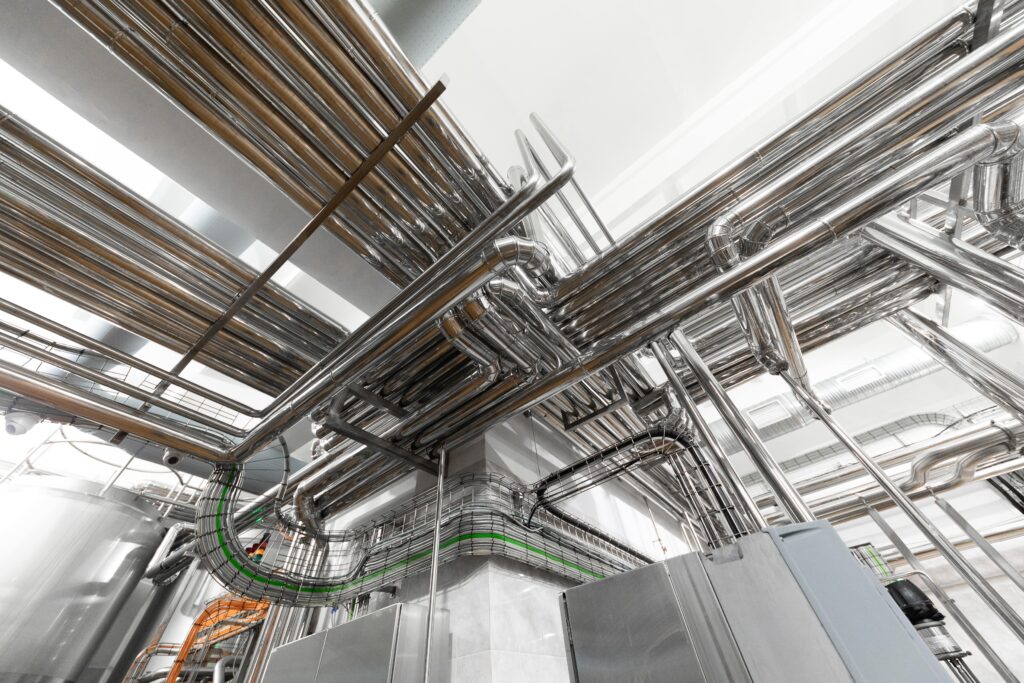
Similar benefits are offered by the prefabrication of pipelines used in process, refrigeration, and sanitary installations. In the factory, pipeline sections can be precisely prepared and welded according to the design, followed by non-destructive inspection and leak testing.
This allows only prefabricated structural elements to be assembled on-site, minimizing the impact of weather conditions and shortening project completion time.
Prefabrication also facilitates maintaining high welding standards – for example, through the use of orbital welding, which ensures repeatability and cleanliness of joints in high-pressure or pharmaceutical installations.
High Quality and Reliability of Prefabricated Solutions
The prefabrication process allows for complete control over the quality of materials, welding technology, and electrical parameters, and also enables testing of finished switchgear and piping modules before transport. As a result, investors receive solutions that ensure the highest quality of workmanship, reduced construction time, and long-term system reliability.
Prefabrication of switchgear and piping is therefore becoming standard in modern industrial construction – where time, precision, and operational safety are crucial.
Prefabrication is the future of industrial installations
Prefabrication is not just a trend today, but a standard in the implementation of modern industrial investments. In an era of increasing quality requirements, time pressures, and the need to optimize costs, more and more companies are realizing that prefabrication is simply a more effective solution than traditional on-site assembly.
By manufacturing components under controlled factory conditions, it is possible to achieve repeatable quality, reduce assembly errors, and ensure the safety of the entire system. Prefabrication of electrical installations and process piping guarantees stable parameters, shortens construction time, and improves project logistics management. Furthermore, the prefabrication process allows work to be carried out concurrently with site preparation, which translates into real financial and time savings for large investments.
At DEFFOR, we combine our construction experience with modern technological resources, providing prefabrication and assembly services for construction and industrial installations based on the highest quality standards. Our solutions include, among others: Prefabricated electrical switchboards, process installations, industrial pipelines, and technical insulation – all designed to provide investors with shorter construction times, reduced risk of errors, and guaranteed system reliability.
Prefabrication enables the creation of facilities where technology and precision go hand in hand with safety. This is precisely why it is considered the future of modern construction and industry – a solution that not only streamlines the construction process but also raises the standard of the entire project.
What exactly is system prefabrication?
System prefabrication is the process of preparing and assembling system components (e.g., electrical switchboards, pipelines, or process systems) in a controlled factory environment, and then delivering them to the construction site. The finished modules are simply assembled, significantly shortening project implementation time and minimizing the risk of errors.
What are the key advantages of system prefabrication?
System prefabrication ensures:
shorter construction time,
higher quality of workmanship thanks to factory-level inspection,
safety of electrical and process systems,
lower assembly and logistics costs,
design flexibility – tailored to the investor’s requirements.
The prefabrication process also reduces waste and supports sustainable construction.
What types of projects is prefabrication best suited for?
Prefabrication is ideal for large and medium-sized industrial, energy, and commercial projects – for example, in manufacturing plants, logistics centers, and public buildings. It is also ideal for electrical, plumbing, and process installations, where precision, safety, and speed of assembly are key.
Is prefabrication always better than on-site assembly?
Not always – in some cases, traditional on-site assembly is more justified. This applies to:
modernization of existing installations,
small or non-standard projects,
situations where construction conditions are difficult to predict.
However, a hybrid model is often used, combining prefabrication with partial on-site assembly, allowing for the benefits of both methods.
What does the prefabrication process involve?
A typical prefabrication process consists of several stages:
Development of the design and 3D model of the installation.
Production of components in the prefabrication plant (e.g., switchboards, piping sections).
Quality testing and safety inspection.
Transportation of finished modules to the construction site.
Fast “plug & play” installation assembly.
Each stage is monitored, ensuring full compliance with the design and industry standards.
How does prefabrication of electrical switchboards differ from traditional assembly?
In prefabrication, low-voltage switchboards are manufactured in a factory, where they are assembled, tested, and ready for connection. This eliminates assembly errors and shortens installation time on site. In the traditional model, much of this work is performed on-site, extending the project duration and increasing the risk of non-compliance with the design.
Can prefabrication be used for electrical system upgrades?
Yes, but to a limited extent. Modernizations often utilize prefabricated switchboards, custom-made for existing infrastructure. This solution speeds up work and improves safety, but final assembly typically takes place on-site due to the specific nature of the facility.
How does prefabrication impact the safety of electrical and process systems?
Prefabrication ensures full control over the quality of workmanship and testing of finished components before installation. This means that the investor receives solutions that are fully compliant with standards, tested for overloads, leaks, and thermal resistance – ensuring the safety of electrical systems and the continuity of plant operations.
Does prefabrication actually shorten construction time?
Yes. By conducting work simultaneously – producing prefabricated elements in the plant and preparing the construction site – project completion times can be reduced by up to 30–40%. Prefabrication helps avoid downtime caused by weather, material shortages, or assembly errors.