Orbital welding is an advanced method for joining pipes and plumbing components. The welding head rotates around the workpiece, performing a fully controlled process. TIG welding is most commonly used here, making this technology a precision welding process used in industries requiring the highest quality.
Modern orbital welding technology allows for automated joints, ensuring stable operating parameters, precise heat control, and repeatable results. This ensures consistent weld quality regardless of installation conditions or operator experience.
Orbital Welding in Hygienic Installations
In sectors such as the food, pharmaceutical, and chemical industries, hygienic installations made of corrosion-resistant and easy-to-clean materials are crucial. Therefore, orbital welding is increasingly being used for hygienic installations.
This process is ideal for process media transport systems, where cleanliness requirements are very high and installations must meet stringent hygiene standards, such as GMP and HACCP. In such environments, orbital welding ensures leak-free connections, smooth internal surfaces, and consistent system cleanliness.
This minimizes the risk of gaps, pores, and contaminant buildup, which is crucial in CIP/SIP systems and installations using hygienic fittings.
Materials Used in Orbital Welding
In practice, welding in food and pharmaceutical installations primarily involves high-grade stainless steels, such as:
AISI 316L stainless steel, used in high-purity installations
AISI 304 stainless steel, used in standard process installations
The high quality of the material combined with a precise process allows high-purity orbital welding to produce exceptionally clean and durable orbital welds that meet the requirements of the most demanding manufacturing sectors.
Advantages of Orbital Welding in Process Installations
The greatest advantage of this technology is that automated orbital welding allows for very high welding precision and complete repeatability of the welding process. This allows for stable weld quality and very smooth internal surfaces.
The most important benefits include:
high weld quality and high-quality installation
effective minimization of contamination risk
increased system reliability and increased production efficiency
Orbital welding guarantees high-quality and tight joints, ensures uniform material heating, and minimizes distortion and the risk of manufacturing errors.
This has led to the growing use of orbital welding in applications requiring precise welding and stable process repeatability.
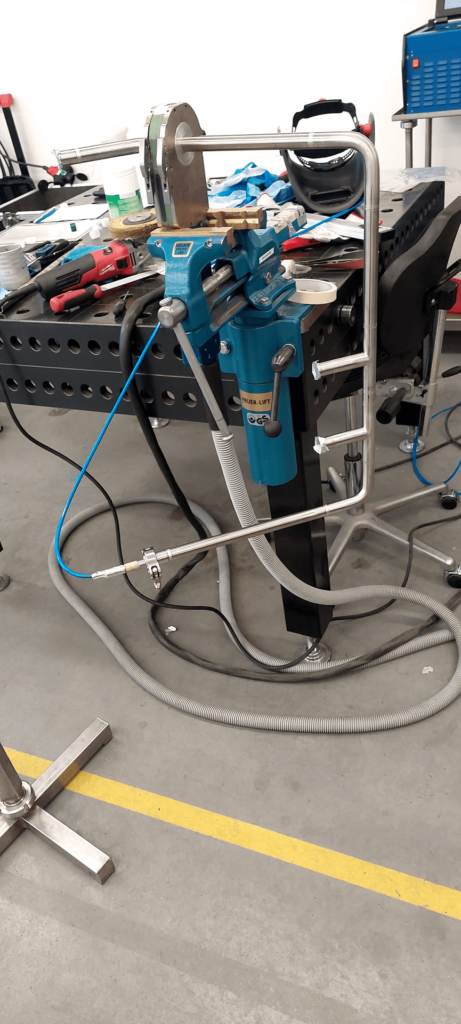
Automation and Modern Welding Systems
Modern modern welding systems increasingly utilize automated welding systems, which allow for full automation of the welding process. This means that the operator supervises the process, but the operation itself is performed by a device that ensures identical parameters for each joint.
Such solutions enable:
faster welding of system components
consistently high process quality
effective weld quality control
easier certification and documentation of welding systems
As a result, high-quality welding is becoming the standard in plants that must ensure compliance with the highest production standards.
Orbital Welding vs. Classic TIG Welding
While TIG welding remains one of the basic metal joining methods, orbital welding represents its evolution toward automation and maximum repeatability. Classic TIG welding is often used in assembly and construction work, while orbital solutions dominate in process and hygienic installations.
Where perfect pipe welding, very high-quality welding services, and complete process control are required, orbital welding proves to be a more effective solution.
FAQ – Frequently Asked Questions about Orbital Welding
Is orbital welding necessary in hygienic installations?
In many cases, yes, because this technology facilitates meeting stringent sanitary and quality requirements.
What industries most commonly use orbital welding?
The most common are the food, pharmaceutical, and biotechnology industries, as well as chemical installations.
Does orbital welding provide better quality than manual welding?
Yes – automation makes the process more stable, and repeatability of the welding process and high weld quality are easier to achieve.
Are orbital welding installations more durable?
Yes, because orbital welding ensures tightness and high durability, which translates into greater system reliability.
Summary
Orbital welding is currently one of the most important technologies used in the construction of hygienic installations, where cleanliness, process safety, and consistent quality are key. Thanks to automation, precision, and the ability to operate at high purity standards, this method is becoming the foundation of modern process installations.
At Deffor, we perform orbital welding of process, food, and pharmaceutical installations using modern equipment and proven quality control procedures. We offer comprehensive support – from process preparation, through precision welding, to documentation and quality inspections.
If you are planning to build or modernize a process installation and are looking for a solution that meets the highest standards of cleanliness and quality, contact us. We will advise on the appropriate technology, prepare the process, and perform orbital welding according to the requirements of your industry.
Contact us and see how we can support your project.